

How Everyday Activities Can Boost Your Academic Performance
 0
0
 0
0
Most students searching for a performance edge look toward study techniques, flashcard apps, or tutoring sessions. Those tools matter, but they overlook a bigger lever: the hours you spend away from your desk. What you do in the gym, the kitchen, on a walk, or with friends shapes your brain in ways that directly affect how well you learn, remember, and perform under exam pressure.
This is about reclaiming those “off” hours as an active part of your academic strategy.
Why Your Brain Works Better With a Full Life
Academic performance depends on memory consolidation, attention span, stress regulation, and processing speed. All four of those functions respond to lifestyle inputs, not just study volume. Sleeping eight hours after a lecture does more for retention than pulling a second review session at midnight. A 20-minute walk before a problem set measurably improves working memory.
The research here is consistent. A 2019 meta-analysis published in the British Journal of Sports Medicine found that even a single bout of aerobic exercise improved executive function and memory in students. These are the exact cognitive tools you use when writing essays, solving equations, or analyzing arguments.

Physical Activity
Why Movement Is a Study Tool
Exercise increases blood flow to the prefrontal cortex, the region responsible for planning, decision-making, and focus. It also triggers the release of brain-derived neurotrophic factor (BDNF), a protein that promotes the growth of new neural connections. Think of BDNF as fertilizer for learning.
You do not need to train like an athlete. A 30-minute brisk walk three to five times per week is enough to see cognitive benefits. Cycling to campus instead of taking the bus, taking the stairs, or doing a quick bodyweight circuit before morning study sessions all count.
The Best Times to Move for Academic Gain
Timing your exercise can amplify the effect. Many students find a short workout before a demanding study session sharpens focus for the following 90 minutes to two hours. Morning exercise also stabilizes mood and cortisol levels across the rest of the day, which means fewer attention crashes by mid-afternoon.
Sleep and Recovery
Sleep is where your brain files the day’s information. During slow-wave and REM sleep, your hippocampus transfers short-term memories into long-term storage. Skip sleep and those memories stay fragile, easy to forget under pressure.
The practical rule is straightforward: protect seven to nine hours as a non-negotiable block. Students who consistently sleep less than six hours show measurable drops in reaction time, creative thinking, and emotional regulation, exactly the skills exams test.
A consistent sleep schedule matters as much as duration. Going to bed at the same time each night regulates your circadian rhythm, which improves sleep quality even if the total hours stay the same.
Social Connection and Active Conversation
Talking through ideas with other people is a form of active recall. When you explain a concept to a friend, your brain retrieves information, reorganizes it, and encodes it more deeply than passive re-reading ever achieves. Study groups work for this reason, and so do casual conversations about what you are learning.
Beyond memory, social connection lowers cortisol. Students with stronger social networks report lower exam anxiety and recover faster from academic setbacks. This makes investing in friendships a direct investment in performance, not a distraction from it.
Nutrition and Hydration
Your brain runs on glucose and requires a steady supply of micronutrients to synthesize neurotransmitters. Skipping meals or eating high-glycemic foods produces sharp energy spikes followed by cognitive slumps, which are the worst possible state for focused studying.
The foods with the strongest evidence for cognitive support include:
- Oily fish (salmon, mackerel, sardines) for omega-3 fatty acids
- Leafy greens (spinach, kale) for folate and antioxidants
- Whole grains for sustained glucose release
- Berries, especially blueberries, for flavonoids that support memory
- Nuts and seeds for vitamin E and healthy fats
- Water, consistently through the day, for baseline concentration
Even mild dehydration of around 1 to 2 percent of body weight reduces attention and short-term memory. Keep a water bottle on your desk. It is one of the simplest performance adjustments you can make.
How Activities Map to Academic Skills
The table below connects specific everyday activities to the cognitive skills they build, based on current research.
| Everyday Activity | Primary Cognitive Benefit | Recommended Frequency |
|---|---|---|
| Aerobic exercise (walk, run, cycle) | Memory, focus, executive function | 3 to 5 times per week |
| 7 to 9 hours of sleep | Memory consolidation, emotional regulation | Every night |
| Social discussion of course material | Active recall, concept retention | 2 to 3 times per week |
| Balanced meals with complex carbs | Sustained attention, stable mood | Every meal |
| Meditation or deep breathing | Stress reduction, attention control | 10 to 15 minutes daily |
| Time outdoors in natural light | Circadian rhythm, mood stabilization | Daily if possible |
Mindfulness and Stress Management
Chronic stress actively shrinks the hippocampus over time, which is the brain region most involved in learning new material. Managing stress through daily habits is therefore a protection strategy for your academic capability.
Ten minutes of focused breathing or body-scan meditation each morning lowers baseline cortisol and trains the attentional control your brain uses when you read dense material. Apps help, but a timer and a quiet chair work just as well.
Spending time outdoors also helps. Natural environments reduce activity in the brain’s default mode network, which is the region responsible for rumination and worry. A 15-minute walk in a park or green space delivers a measurable reduction in stress markers.
Key Takeaways
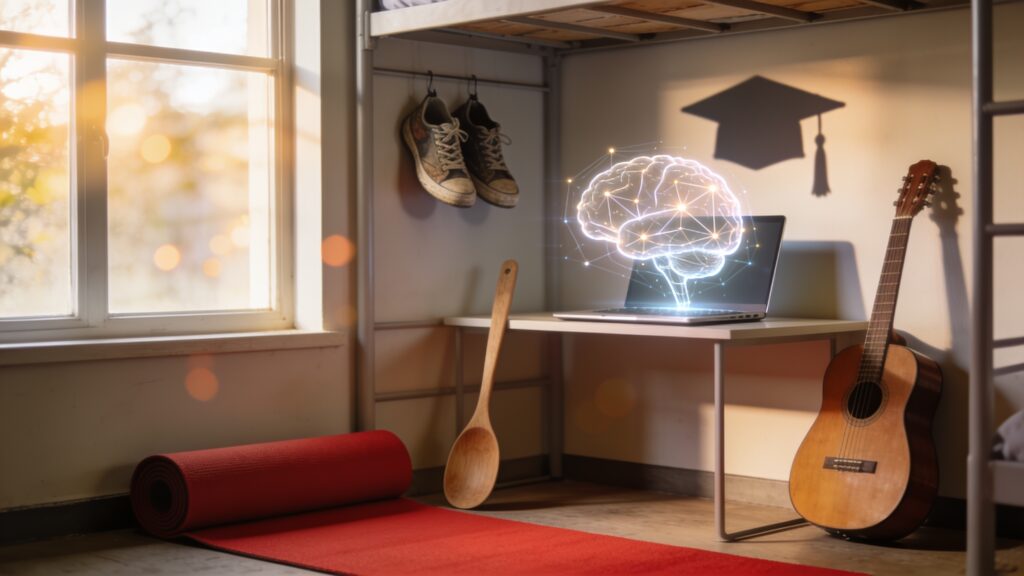
The activities that seem furthest from your desk often do the most for your grades. Physical movement, quality sleep, real food, social engagement, and daily recovery practices all build the cognitive infrastructure that academic success depends on.
Start with one change this week. Commit to a 30-minute walk before your hardest study session, or set a fixed sleep schedule for seven days, and pay attention to how your focus and recall shift. The evidence is clear, and the cost of trying is low.
Build the life that supports the academic performance you are working toward. Your brain will meet you halfway.